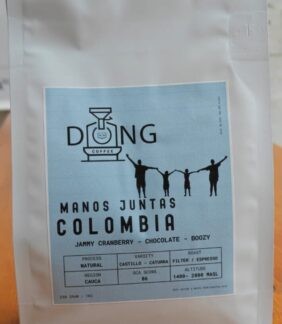
19,40 € – 67,50 €Micromill: Manos Juntas Micromill
Manos Juntas is a micromill in Sotara area of Colombia’s Cauca region, operated and managed by our exporting partners at Banexport. The entire concept of this micromill is based on simplifying tasks and responsibilities, for both producers and Banexport.This particular offering was first purchased in its cherry form when delivered to the mill on the day of harvest. Upon arrival, the Brix and pH were recorded, and the cherries are placed in large hermetic tanks for a five-day-long anaerobic fermentation: Each tank is labeled with the name of the producer, to retain traceability. During this period, nitrogen gas is introduced into the tanks in order to stimulate the yeast. Brix and pH are measured constantly through this process and are used to determine the stopping point for fermentation; the coffee is then subjected to 20°C temperatures in order to cease fermentation and remove the yeast and other microorganisms.For Honey-processed coffees, the cherries are then depulped and dried with the mucilage on in raised beds under shade.For Naturally-processed coffees, the cherry is then “aged” in tanks for a period of five more days before they are taken to solar dryers. Drying takes 30–45 days.Once dried, the coffee is cupped and samples are sent to Cafe Imports. They are then approved, milled, and shipped.Banexport believes that when it comes to a breakdown in factors that contribute to quality:50% is determined by crop production (fertilization, pruning, and proper harvest of cherries)50% is determined by post-harvest processing (fermentation, pulping, drying, and storage)Based on this understanding, Banexport decided to establish Manos Juntas Micromill, in which they purchase cherries from producers and manage the processing, drying, and storage themselves. This model allows producers to focus on the healthy production of specialty coffee, while the meticulous work of sorting, processing, drying, and storing is managed by Banexport’s team.Key takeaways about this program:Producers deliver and sell coffee in cherry form to Banexport, by total weight. The riper the cherry, the heavier it is. This encourages better harvest practice that directly correlates to higher quality.Producers get paid upfront for their coffee, typically producers have to wait 35 to 40 days for coffee to dry before selling it.Banexport guarantees to pay producers a fixed price well above the market value for these cherries.Producers involved are from surrounding farms. This means they need only to travel a short distance to deliver coffee, as opposed to driving many kilometers into town.Coffee infrastructure, like drying beds, fermentation tanks, and depulpers, can be very expensive to purchase and maintain. With this model, farmers can forgo all of this hassle and focus on maintaining healthy trees.
The Cup: Jammy cranberry, chocolate, and caramelizing flavors with lots of boozy acidity and candy-like sweetness.