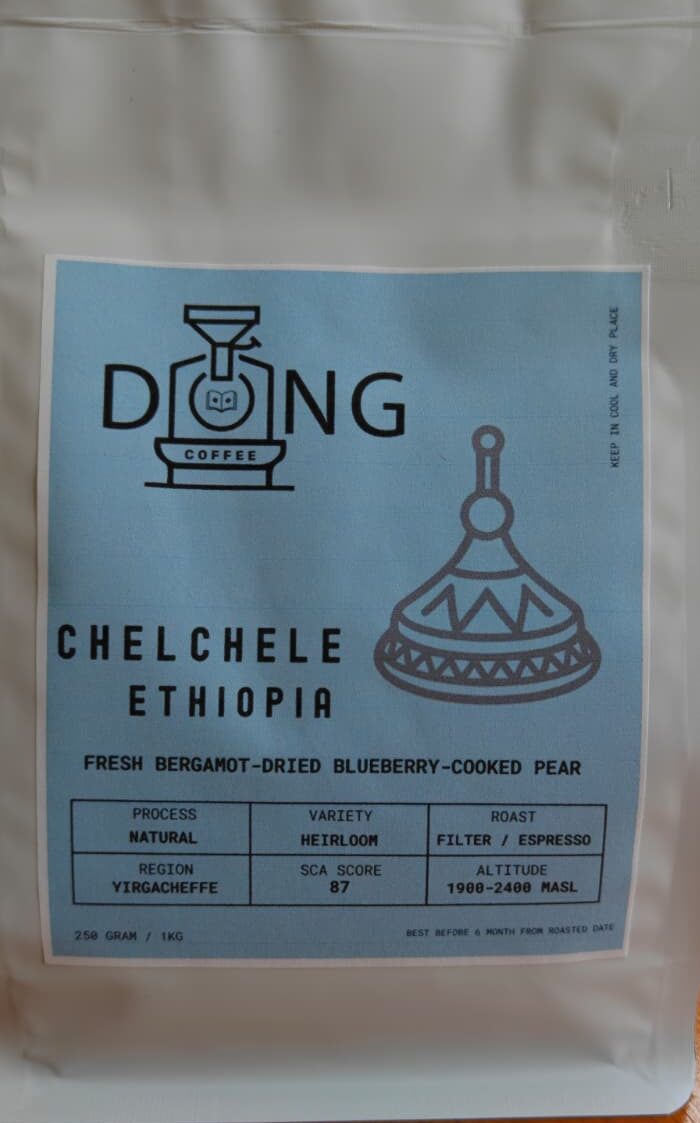
Ethiopia-Chelchele
Country: Ethiopia – Chelchele
Among coffee-producing countries, Ethiopia holds near-legendary status not only because it’s the “birthplace” of Arabica
coffee, but also because it is simply unlike every other place in the coffee world. Unlike the vast majority of coffee-growing
countries, the plant was not introduced as a cash crop through colonization. Instead, growing, processing, and drinking coffee
is part of the everyday way of life, and has been for centuries since the trees were discovered growing wild in forests and
eventually cultivated for household use and commercial sale.The majority of Ethiopia’s farmers are smallholders and
sustenance farmers, with less than 1 hectare of land apiece. In many cases, it is almost more accurate to describe these farms
as “coffee gardens” as the trees do sometimes grow in more of a garden or forest environment than what we imagine fields of
farmland to look like. There are some large privately owned estates, as well as co-operative societies comprising a mix of
small and more mid-size farms, but the average producer here grows relatively very little for commercial sale.
Country: Ethiopia – Chelchele
Among coffee-producing countries, Ethiopia holds near-legendary status not only because it’s the “birthplace” of Arabica
coffee, but also because it is simply unlike every other place in the coffee world. Unlike the vast majority of coffee-growing
countries, the plant was not introduced as a cash crop through colonization. Instead, growing, processing, and drinking coffee
is part of the everyday way of life, and has been for centuries since the trees were discovered growing wild in forests and
eventually cultivated for household use and commercial sale.The majority of Ethiopia’s farmers are smallholders and
sustenance farmers, with less than 1 hectare of land apiece. In many cases, it is almost more accurate to describe these farms
as “coffee gardens” as the trees do sometimes grow in more of a garden or forest environment than what we imagine fields of
farmland to look like. There are some large privately owned estates, as well as co-operative societies comprising a mix of
small and more mid-size farms, but the average producer here grows relatively very little for commercial sale.
The Cup:
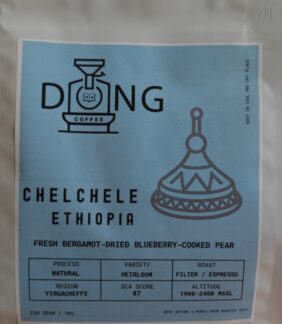
Fresh bergamot, dried blueberry, cooked pear, and perfume flavors with mild clean
fruit-like sweetness and balanced acidity.
Washing Station: Chelchele
This coffee comes from the Chelchele washing station, which is in the kebele, or
village, of Chelchele, in the words, or district, of Kochere, in the Yirgacheffe region.
Chelchele coffees tend to have a nice backbone of sweetness from toffee and/or
soft nuts like almond, with a floral and citrus overtone.Coffees in Ethiopia are
typically grown on very small plots of land by farmers who also grow other crops.
The majority of smallholders will deliver their coffee in cherry to a nearby washing
station or central processing unit, where their coffee will be sorted, weighed, and
paid for or given a receipt. Coffee is then processed, usually washed or natural, by
the washing station and dried on raised beds.The washing stations serve as many
as several hundred to sometimes a thousand or more producers, who deliver
cherry throughout the harvest season: The blending of these cherries into day lots
makes it virtually impossible under normal circumstances to know precisely whose
coffee winds up in which bags on what day, making traceability to the producer
difficult. We do, however, make every available effort to source coffee from the same washing stations every year, through our export partners and their
connections with mills and washing stations.Typically farmers in this region don’t
have access to and therefore do not utilize fertilizers or pesticides in the production
of coffee.
Process: Natural
Natural coffees are typically delivered the day they are harvested, and are first sorted for ripeness and quality before being
rinsed clean of dirt. Then they are spread on raised drying beds or tables, where they will be rotated constantly throughout the
course of drying. Drying can take an average of 8–25 days, depending on the weather.
Region: Yirgacheffe
Yirgacheffe has become famous for coffees that tastes like blueberries. This region is plentiful. The thick vegetation is a
product of the warm tropical climate with moderate wet and dry seasons. Most coffee is shade-grown by small producers
using organic practices. Coffees are cultivated from 1900 to 2400 masl in these highlands. The multitude of microregions
creates complex profiles depending on the washing station a particular coffee is from.
| size | 1kg, 250grams |
|---|
Related products

Colombia Betulia
22,90 € – 81 €Kenya- Kagumo
18,80 € – 64 €Colombia Manos Juntas
19,40 € – 67,50 €Peru Gramalotal
22,80 € – 79,80 €Colombia- Decaffeinated
17,80 € – 62,80 €