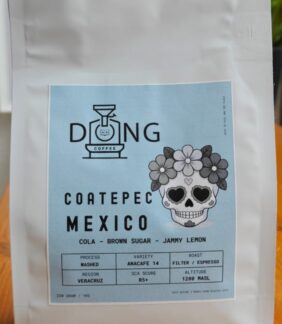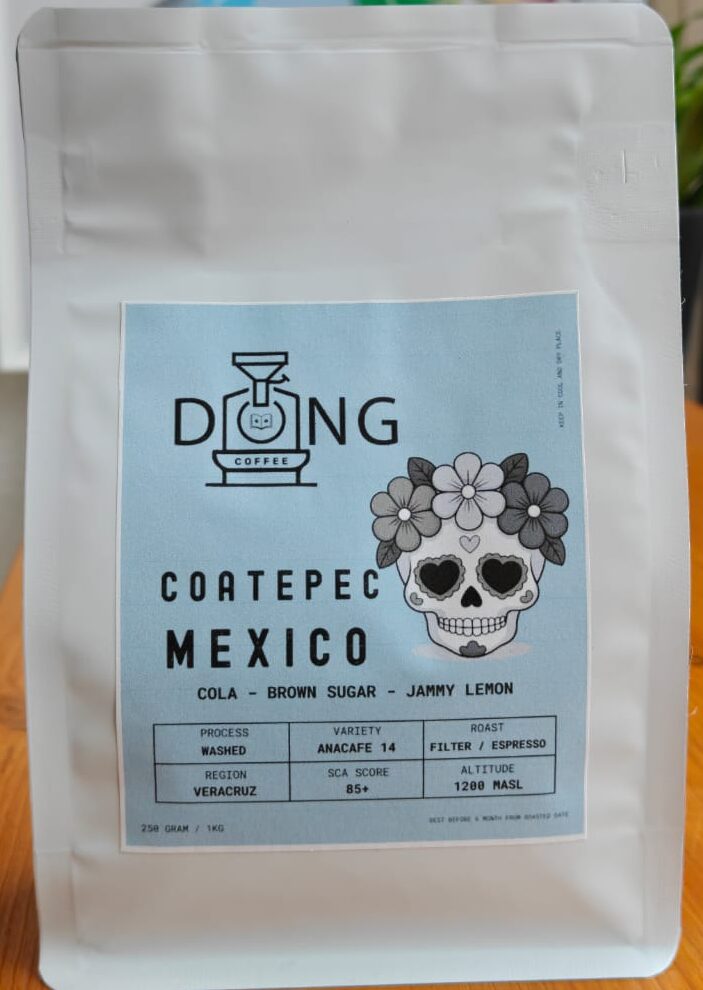
Mexico Cotepec
Country: Mexico Alejandro Martinez
Finca San Jose – Coatepec – Veracruz – Anacafe 14 – Washed As throughout most of Mesoamerica, Mexico was first planted in coffee during early colonial times, most likely in the late 18th century. Due to the greater attention paid to the region’s rich mineral deposits and mining opportunities, coffee didn’t really develop as an industry until later, especially coming into its own in the late 19th and early 20th centuries with the redistribution of farms after independence and the emergence of smallholder farmers, specifically those of indigenous origin. In the late 20th century, the Mexican government established a national coffee institution called INMECAFE, which, like the FNC in Colombia and ICAFE in Costa Rica, was developed in order to offer technical assistance, botanical information and material, and financial credits to producers. Unfortunately, INMECAFE was something of a short-lived experiment, and dissolved in 1989, leaving growers with a vacuum in their access to support and resources—especially those in very remote rural areas. This disruption to the infrastructure as well as the coffee crisis that followed the end of the International Coffee Agreement plunged Mexico’s coffee farmers into despairing financial times, which of course in turn affected quality dramatically. Throughout the 1990s and since the beginning of the 21st century, an increased presence, influence, and focus of Fair Trade and Fairtrade certifications and the emphasis on the democratically run small-farmer cooperative organization have worked to transform the image of Mexican coffee to one that reflects sustainability, affordability, and relatively easy logistics, considering its proximity to the United States. In recent years, Mexico has struggled mightily with coffee-leaf rust and other pathogens that have reduced both yield and cup quality. This, combined with an enormous turnover of land ownership and loss of labor to emigration and relocation has created a somewhat tentative future for the producing country, though we have seen great cups and great promise from quality-inclined growers and associations there. The top cups are fantastic, and they’re worth the work and long term investment to try to overcome the obstacles facing the average farmer, who owns between 1–5 hectares, though some of the mid-size estates will run closer to 25 hectares.One of the things that have set Mexico’s coffee apart is the abundance of both Fair Trade- and organic-certified coffees, especially in areas like Oaxaca, Veracruz, and Chiapas. The strong influence of indigenous groups and cultures has long been the driving force behind smallholders’ embrace of organic practices, as they are often in line with traditional growing philosophies and utilize similar if not the same techniques. Fair Trade has also done considerable work with regard to encouraging smallholders to organize and operate within cooperatives, which allows them to pool resources, provides better access to credit and financing options, and creates more market presence and leverage in a competitive global economy. In addition, many of the coffees that we at Cafe Imports source from Mexico come from the buffer zones around one of the largest and most forest reserves in the world: El Triunfo Biosphere Reserve.
The Cup: Cola and brown sugar with dried currant and jammy lemon flavors. Tangy acidity and mild sugary sweetness.
Country: Mexico Alejandro Martinez
Finca San Jose – Coatepec – Veracruz – Anacafe 14 – Washed As throughout most of Mesoamerica, Mexico was first planted in coffee during early colonial times, most likely in the late 18th century. Due to the greater attention paid to the region’s rich mineral deposits and mining opportunities, coffee didn’t really develop as an industry until later, especially coming into its own in the late 19th and early 20th centuries with the redistribution of farms after independence and the emergence of smallholder farmers, specifically those of indigenous origin. In the late 20th century, the Mexican government established a national coffee institution called INMECAFE, which, like the FNC in Colombia and ICAFE in Costa Rica, was developed in order to offer technical assistance, botanical information and material, and financial credits to producers. Unfortunately, INMECAFE was something of a short-lived experiment, and dissolved in 1989, leaving growers with a vacuum in their access to support and resources—especially those in very remote rural areas. This disruption to the infrastructure as well as the coffee crisis that followed the end of the International Coffee Agreement plunged Mexico’s coffee farmers into despairing financial times, which of course in turn affected quality dramatically. Throughout the 1990s and since the beginning of the 21st century, an increased presence, influence, and focus of Fair Trade and Fairtrade certifications and the emphasis on the democratically run small-farmer cooperative organization have worked to transform the image of Mexican coffee to one that reflects sustainability, affordability, and relatively easy logistics, considering its proximity to the United States. In recent years, Mexico has struggled mightily with coffee-leaf rust and other pathogens that have reduced both yield and cup quality. This, combined with an enormous turnover of land ownership and loss of labor to emigration and relocation has created a somewhat tentative future for the producing country, though we have seen great cups and great promise from quality-inclined growers and associations there. The top cups are fantastic, and they’re worth the work and long term investment to try to overcome the obstacles facing the average farmer, who owns between 1–5 hectares, though some of the mid-size estates will run closer to 25 hectares.One of the things that have set Mexico’s coffee apart is the abundance of both Fair Trade- and organic-certified coffees, especially in areas like Oaxaca, Veracruz, and Chiapas. The strong influence of indigenous groups and cultures has long been the driving force behind smallholders’ embrace of organic practices, as they are often in line with traditional growing philosophies and utilize similar if not the same techniques. Fair Trade has also done considerable work with regard to encouraging smallholders to organize and operate within cooperatives, which allows them to pool resources, provides better access to credit and financing options, and creates more market presence and leverage in a competitive global economy. In addition, many of the coffees that we at Cafe Imports source from Mexico come from the buffer zones around one of the largest and most forest reserves in the world: El Triunfo Biosphere Reserve.
Farm: Alejandro Martinez Alejandro Martinez Anaya owns a 250-hectare farm called San Jose, where he has 60 hectares planted with Anacafe 14 among other coffee varieties. On Alejandro’s farm, the coffee is picked ripe and fermented in its cherries, for about 18 hours. It’s depulped the following day and washed before being set to dry in a casa elba (rooftop drying structure) for 32 days.
Alejandro Martinez – Finca San Jose – Coatepec – Veracruz – Anacafe 14 – Washed Microlots from Mexico are farm-specific and sourced based on the cup quality; they represent the highest quality and the highest price grade of Mexican coffees on our offerings list and come with the most traceability.
Process: Washed Alejandro Martinez – Finca San Jose – Coatepec – Veracruz – Anacafe 14 – Washed As is common throughout Central and South America, coffees in Mexico tend to be processed as Washed lots. While the details may vary from place to place, typically the coffee is depulped the same day it’s harvested, then given a 12–18-hour fermentation in tanks or buckets before being washed clean of mucilage and dried. Drying typically takes place on patios or in mechanical dryers.
Region: Veracruz Alejandro Martinez – Finca San Jose – Coatepec – Veracruz – Anacafe 14 – Washed Veracruz is situated on the gulf, with coastal plains rising steeply into the mountains. Coffee first came to Mexico by way of the Spanish and was planted in Veracruz. Coffee has been part of the culture of this region since, and in recent years, we’ve noticed the development of rust-resistant hybrids being grown around the town of Cotapec. These small community producers are adapting to the challenges of the past decade, and the quality coming out of this region leads us to believe this is Mexico’s premier region for specialty coffees.
The Cup: Cola and brown sugar with dried currant and jammy lemon flavors. Tangy acidity and mild sugary sweetness.
| size | 1kg, 250grams |
|---|
Related products
AFONSO BRAZIL
14,60 € – 48,40 €
Colombia Manos Juntas
19,40 € – 67,50 €Colombia Betulia
22,90 € – 81 €Ethiopia Chelbessa
18,30 € – 63,20 €COLOMBIA – SOTARA
18,60 € – 61,60 €