Luis is a Huila Best Cup 2016 top 30 finalist. He was given a very small lot as a gift
from his father, and, since then, has been expanding and applying better methods
of processing techniques. Coffee has changed the style of his life: He and his family
work together as a team to run the farm. He collects only ripe cherries, ferments
dry for 25 hours, then moves the coffee to his parabolic dryer for an average of 25
days.
Select options
This product has multiple variants. The options may be chosen on the product page
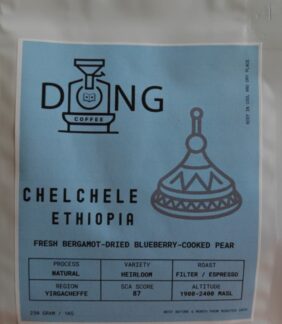
Country: Ethiopia – Chelchele
Among coffee-producing countries, Ethiopia holds near-legendary status not only because it’s the “birthplace” of Arabica
coffee, but also because it is simply unlike every other place in the coffee world. Unlike the vast majority of coffee-growing
countries, the plant was not introduced as a cash crop through colonization. Instead, growing, processing, and drinking coffee
is part of the everyday way of life, and has been for centuries since the trees were discovered growing wild in forests and
eventually cultivated for household use and commercial sale.The majority of Ethiopia’s farmers are smallholders and
sustenance farmers, with less than 1 hectare of land apiece. In many cases, it is almost more accurate to describe these farms
as “coffee gardens” as the trees do sometimes grow in more of a garden or forest environment than what we imagine fields of
farmland to look like. There are some large privately owned estates, as well as co-operative societies comprising a mix of
small and more mid-size farms, but the average producer here grows relatively very little for commercial sale.
Select options
This product has multiple variants. The options may be chosen on the product page
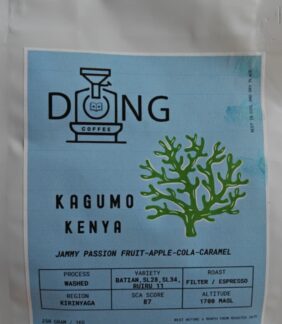
Country: Kenya
More than a decade ago, before the term “microlot” became common usage in specialty coffee, Cafe Imports began direct
sourcing coffees in Kenya during a time when most importers were unwilling to take the chance on bringing in small, traceable
lots of coffee from individual mills and estates.Jason Long, one of Cafe Imports’ principal partners and coffee buyers, decided
that the risk was worth the potential reward. Thanks to Jason’s willingness to go out on a limb, our longstanding partnerships in
Kenya allow us to source exceptional, traceable Kenyan coffees, often from the same factories and estates that we have
partnered with for years. We are also able to offer a selection of full-container, mid-price lots of solid quality, including our
signature Kichwa Tembo and Regional Select Uteuzi Jimbo projects, that make for great blend or lower-cost single-origin
options.
Select options
This product has multiple variants. The options may be chosen on the product page
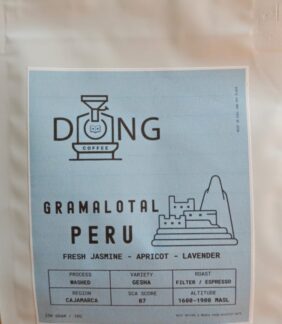
Country: Peru Yoryi Yimer Berru – Finca Gramalotal – La Coipa – Gesha
Though coffee arrived in Peru relatively early—in the middle of the 1700s—it wasn’t cultivated for commercial export until
nearly the 20th century as demand from Europe rose due to a significant decrease in coffee production in Indonesia. British
presence and influence in the country helped increase and drive exports. In the early 1900s, the British government took
ownership of roughly 2 million hectares of land from the Peruvian government as payment on a defaulted loan, and much of
that land became British-owned coffee plantations.As in many Central and South American countries, the large European
owned landholdings were sold or redistributed throughout the 20th century. Farms became smaller and more fragmented,
offering independence to farmers but also limiting their access to resources and a larger commercial market. Unlike many
other countries whose coffee economy is dominated by smallholders, Peru lacks the organization or infrastructure to provide
economic or technical support to farmers—a hole that outside organizations and certifications have sought to fill. The country
has a remarkable number of certified-organic coffees, as well as Fair Trade, Rainforest Alliance, and UTZ-certified coffees.
Around 30 percent of the country’s smallholders are members of democratic co-ops, which has increased the visibility of
coffees from the area but has done little to bring incredibly high-quality lots into the spotlight.As of the 2010s, Peru is one of
the top producers of Arabica coffee, often ranked fifth in world production and export of Arabica. The remoteness of the coffee
farms and the incredibly small size of the average farm have prevented much of the single-farm differentiation that has
allowed for microlot development and marketing in other growing regions, but as with everything else in specialty coffee, this
is changing quickly as well. The country’s lush highlands and good heirloom varieties offer the potential for growers to beat the
obstacles of limited infrastructure and market access, and as production increases, we are more likely to see those types of
advancements.
The Cup: Fresh jasmine, artificial raspberry, and fresh lavender with mild fresh apricot flavors.
Clean fruit-like sweetness and winey acidity.
Select options
This product has multiple variants. The options may be chosen on the product page